Home " Hydrogen fuel cell joint

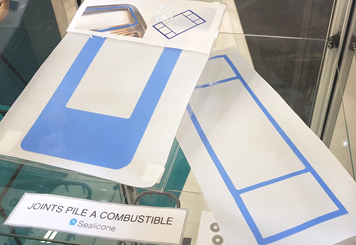
Hydrogen fuel cell gasket

Hydrogen fuel cell gaskets have constraints that are specific to this type of sealing.
Geometry: They are part of a stack of several hundred elements. To prevent this stack from becoming bulky, the gasket must be as thin as possible.
Moreover, uniform thickness is a key factor in achieving an excellent seal. This is why manufacturing tolerances are extremely narrow.
Material: As hydrogen atoms are among the smallest atoms, the material chosen is one that is suitable for this type of sealing.
Please do not hesitate to contact us for further information.

More details

Features

Details

A hydrogen or fuel cell produces a chemical reaction through oxidation and the presence of gas, generating electricity.
A membrane fuel cell consists of :
- Bipolar plates to distribute hydrogen and oxygen, and evacuate water.
- 2 electrodes to circulate the electric current.
- Membrane that blocks electrons and lets protons through.
- Catalysts to amplify the reaction between gases.
- Gaskets or membranes to create a seal between the various elements.

These gaskets or membranes must be perfectly regular, very thin and with very little tolerance on thickness.