
Our expertise at every stage of the manufacturing process—from tooling design and draping to composite machining and assembly—enables us to offer you a product that is optimized both technically and economically.
The contact draping process requires simple and inexpensive production equipment.
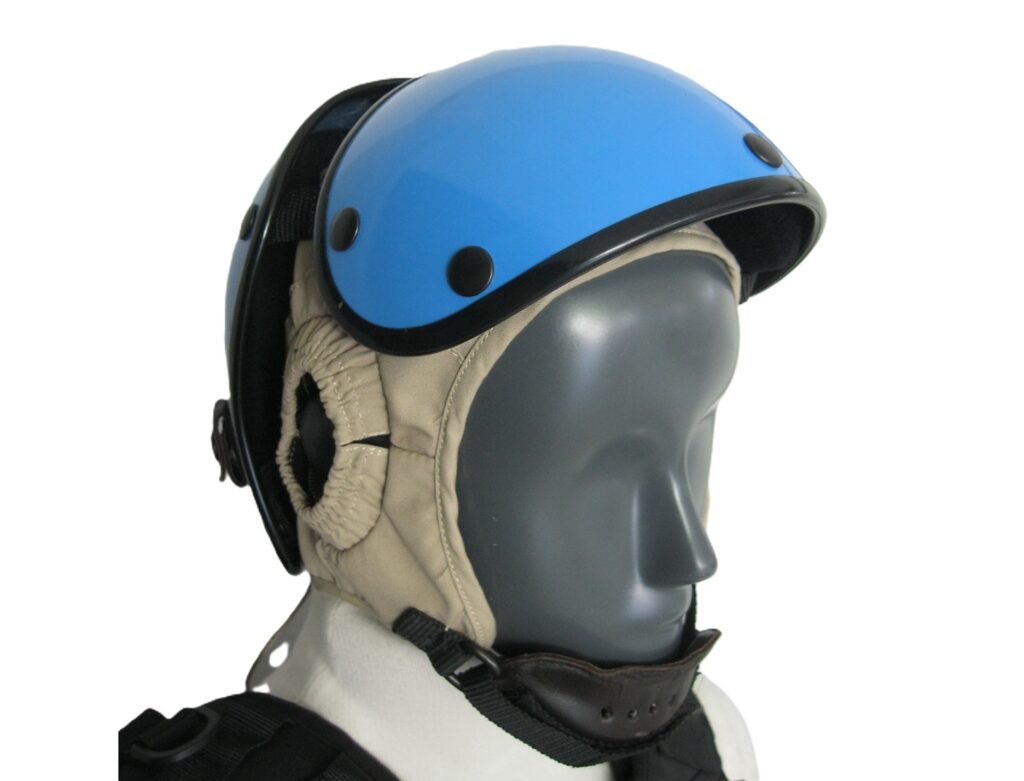
For example, we manufacture helmets for the military.
First, we design them based on requirements for impact resistance, weight, and the instruments they will be equipped with. We then determine the most suitable geometry and materials.
Next, we form the shells, trim them, line them with textiles for comfort and ergonomics, and equip them with communication devices.
Wet contact molding is a combination of craftsmanship and technical expertise that requires the following steps:
- Cleaning the tools and applying a release agent.
- Application of a tinted gel coat that provides a glossy finish and protects the fibers from scratches and UV rays.
- Laminating reinforcements (glass, carbon, aramid) impregnated with thermosetting resin (epoxy, phenolic, polyester) onto the gel coat (which is still slightly tacky).
- De-airing using a serrated roller to break up bubbles and distribute the resin evenly over the reinforcements.
- Curing of the resin through an exothermic reaction.
- Finishing by trimming and drilling.
- Assembly or bonding of equipment to composite hulls.